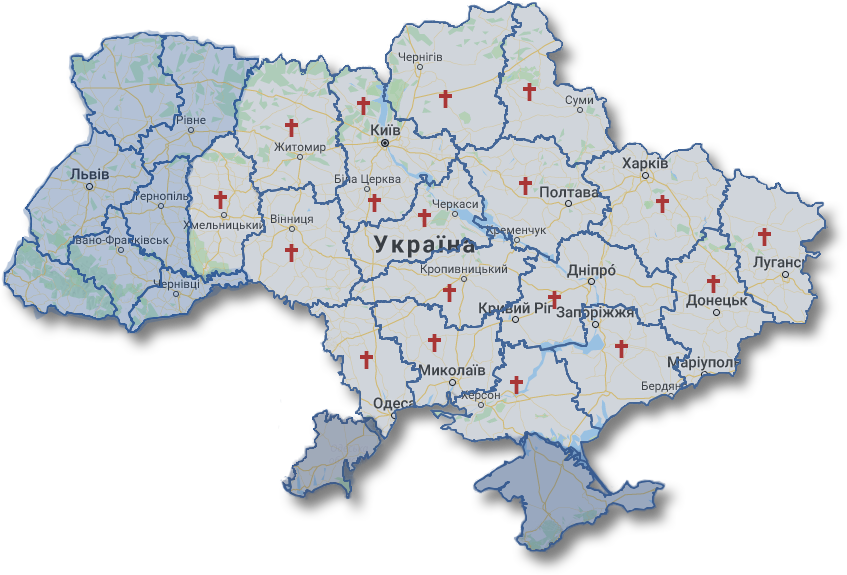
Місця масового поховання жертв Голодомору-геноциду

The geoportal contains a map of the administrative structure of the Ukrainian SSR (1933), a map of the Holodomor territory, and a modern map of Ukraine (2018).

The modern map of Ukraine marks the sites of mass burials of Holodomor genocide victims, as well as monuments and memorials established to commemorate the Holodomor victims. You can conduct searches by region, district or settlement.

Переглянути карту

Ukraine lost millions of people due to the Holodomor. Entire families died out. Villages were empty. Death was no longer considered an extraordinary phenomenon. Exhausted by the prolonged starvation, the farmers no longer had the strength to bury their relatives who had died of hunger. Unburied corpses were lying in houses for days. The bodies of dead farmers who had sought refuge in cities but did not find it filled the squares and sidewalks.

To conceal the scale of mortality and prevent the spread of infection, local authorities organised the collection and burial of the bodies of people killed by starvation. For this purpose, large burial pits were dug in local cemeteries. Corpses collected from the streets were also taken to the outskirts of towns and cities into ditches and other natural holes. Bodies were often buried secretly, at night, without coffins or traditional ceremonies. No memorials were installed at the sites of mass burials.

Denying the very fact of the Holodomor in Ukraine, the occupying communist regime carefully concealed the mass burial sites of the genocide victims. To this end, they created city parks and recreation areas on the burial sites, built factories, and laid roads. The plots in village cemeteries were neglected and overgrown with bushes and grass. However, those who managed to survive always remembered their existence.

A pre-trial investigation of criminal case No. 475, conducted by the Security Service of Ukraine in 2009, identified 857 mass burial sites of Holodomor victims in Ukraine. The search for them continues to this day. The source of information, as before, remains the witnesses to these events. Given their elderly age, the search, description and recording of the mass burial sites of the Holodomor victims of 1932-1933 are becoming particularly relevant.